
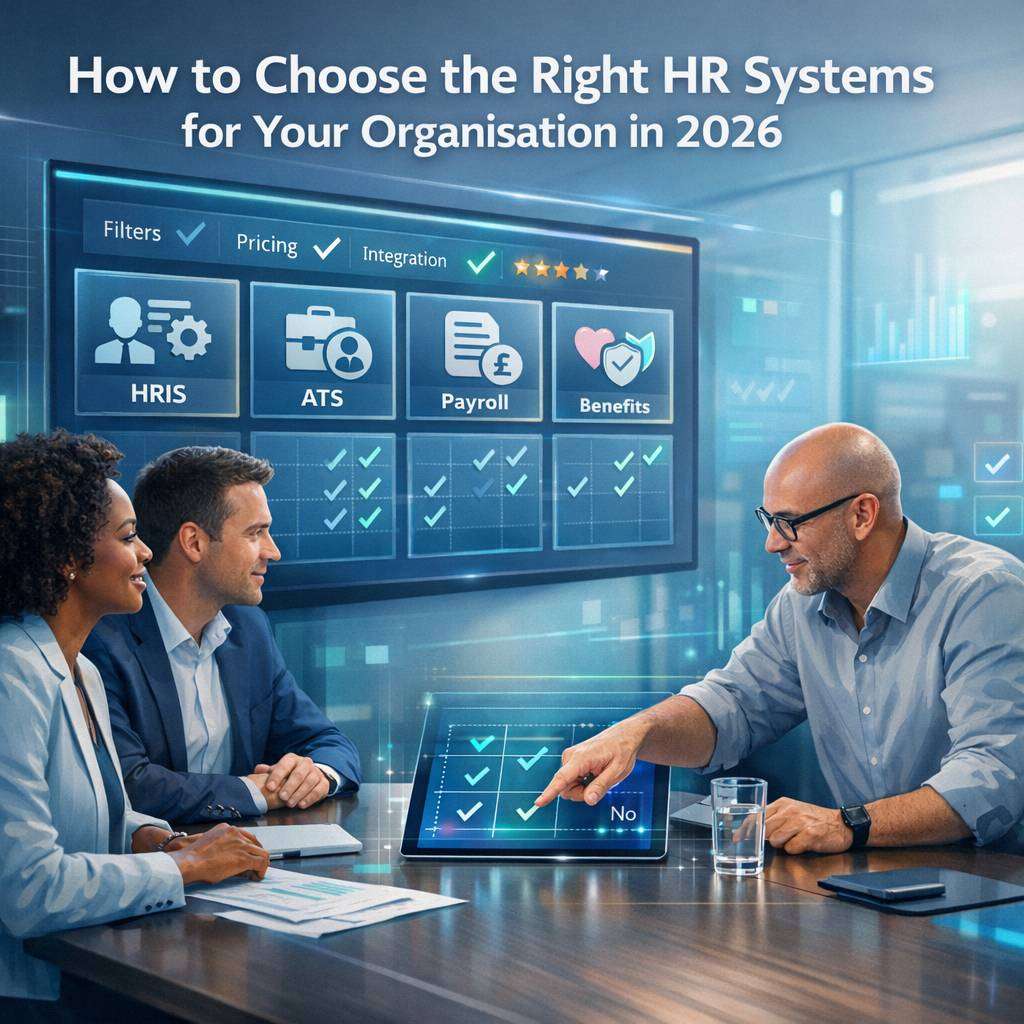
HR systems streamline workforce management, data accuracy, and compliance across departments. They empower HR teams to track hiring, onboarding, performance, and training with real-time dashboards, reducing manual errors and admin time. Seamless integration with payroll, benefits, and timekeeping accelerates decision-making and enhances employee experiences. To learn more about federal guidance and official resources, visit the following link in the second half: https://www.nfc.usda.gov/Services/HRLOB/index.php
HR systems play a pivotal role in modern workplaces, streamlining data, workflows, and reporting to empower HR professionals. By integrating talent analytics, payroll, and compliance, these solutions boost efficiency and decision-making. Organizations benefit from scalable platforms that adapt to changing workforce needs, improve onboarding, and enhance employee experiences. For a compelling opportunity in this field, explore this role: https://jobs.elastic.co/jobs/human-resources/united-states/business-systems-analyst-hr-systems/6688271?gh_jid=6688271.
In organisations of all sizes, the choice of HR systems can determine how smoothly people processes run day to day. As work evolves, so do expectations around data security, accessibility, and seamless integration with other business tools. This guide offers a practical framework for evaluating HR online options and selecting a system that supports strategic people management now and into the future.
With 2026 on the horizon, many organisations are re-evaluating their HR technology stack. A robust HR system is not merely a payroll or employee data repository; it is a platform that enables better decision making, accelerates administrative tasks, and frees HR professionals to focus on value-added activities such as talent development and workforce planning. The aim is to identify a solution that is scalable, user-friendly, and compliant with evolving regulatory requirements—without overwhelming your team with unnecessary complexity.
Understanding your needs and the landscape
Before you compare features, map out your organisation’s specific HR needs. Consider the following:
- People strategy alignment: How will the HR system support performance management, succession planning, and learning and development in your organisation?
- Core modules versus optional add-ons: Do you need time and attendance, recruitment, onboarding, payroll, benefits, performance, learning, and analytics? Or are you seeking a lean, integrated core with optional extensions?
- Data governance and security: What levels of access control, data minimisation, and audit trails are required? How will you handle sensitive information such as compensation, health data, or disciplinary records?
- Compliance and localisation: Are you operating across multiple jurisdictions with different employment laws, leave entitlements, and tax rules? Ensure the solution supports localised configurations.
- Timeline and budget: What is your deployment approach (big bang vs. phased), and what is the total cost of ownership including licences, implementation, training, and ongoing support?
- User experience and accessibility: How intuitive is the interface for HR staff and line managers? Is self-service available for employees, managers, and mobile access?
With these questions in mind, start by building a shortlisting framework that weighs importance against the vendor’s roadmap and support model. Remember that HR systems are as much about people as technology; prioritise user adoption, change management, and the provider’s willingness to partner as your organisation grows.
Evaluating vendors and key capabilities
A successful selection hinges on how well a system fits your organisation’s realities. Focus on these capabilities when assessing HR online options:
- Core HR data and payroll integration: The system should securely manage employee records, attachments, and documentation, while offering reliable payroll integration or processing. Check data migration capabilities and any required data cleansing.
- Recruitment and onboarding: Look for end-to-end recruitment workflows, candidate relationship management, offer management, and onboarding checklists that reflect your organisational practices.
- Performance and development: Ensure the platform supports goal setting, annual reviews, continuous feedback, competency frameworks, and personalised development plans.
- Time, absence, and leave management: The solution should handle attendance capture, leave rules, accruals, and manager-approved requests, with clear audit trails.
- Analytics and reporting: Robust dashboards and analytics enable data-driven decisions on turnover, time-to-fill, costs per hire, and training ROI. Ensure the system supports custom reports and data export for compliance purposes.
- Integrations and ecosystem: Strong APIs and pre-built connectors with payroll providers, CRM, finance systems, and collaboration tools reduce data silos. A marketplace of add-ons can extend functionality as needs evolve.
- Mobility and self-service: Mobile apps and responsive interfaces empower employees and managers to perform tasks on the go, which improves engagement and compliance.
- Security and compliance: Look for encryption at rest and in transit, multi-factor authentication, role-based access control, data localisation options, and granular retention policies.
- Vendor support and roadmap: Assess implementation services, training materials, customer success models, and the vendor’s product roadmap to ensure ongoing alignment with your strategic priorities.
- Sustainability and accessibility: Consider environmental credentials of data centre partners and accessibility compliance to accommodate a diverse workforce.
When reviewing proposals, request live demonstrations and a sandbox environment to test typical scenarios. Involve a cross-functional group from HR, IT, payroll, and risk/compliance to gauge feasibility and gather diverse feedback. Ask vendors for references in organisations similar to yours and check their history of successful implementations and customer satisfaction.
Implementation readiness and change management
A common pitfall is selecting a feature-rich system without a practical plan to embed it into daily operations. Focus on change management and implementation readiness as much as functionality. Key steps include:
- Define a clear implementation plan with milestones, ownership, and accountability. Ensure the plan aligns with your payroll cycles, leave periods, and reporting cadence.
- Prepare data and migration strategy: Identify data sources, mapping schemas, and data cleansing requirements. Establish data quality gates before migration.
- Establish governance and security: Create a data stewardship model with defined responsibilities for HR, IT, and compliance. Implement role-based access controls that align with organisational responsibilities.
- Training and adoption: Develop a comprehensive training programme addressing different user groups, including HR professionals, line managers, and employees. Offer bite-sized modules and ongoing refreshers.
- Change communications: Communicate benefits, timelines, and expectations early. Provide forums for feedback to address concerns and surface improvement ideas.
- Testing and cutover: Plan extensive user acceptance testing, parallel runs if feasible, and a careful go-live strategy to minimise disruption.
By prioritising readiness, you increase the likelihood that your new HR system will deliver the promised improvements in efficiency, accuracy, and strategic insight.
FAQ: HR Systems
What is an HR system?
An HR system is software that helps human resources teams manage employee data, payroll, benefits, performance, recruitment, and other HR-related tasks in one integrated platform.
Why should my organisation implement an HR system?
An HR system centralises data, automates routine processes, improves data accuracy, enhances reporting, and supports better decision-making. It can save time, reduce compliance risk, and scale with company growth.
What are the different types of HR systems?
- Human Resource Information System (HRIS): Core employee data, payroll, benefits, and compliance.
- Human Capital Management (HCM): Broader suite including talent management and workforce analytics.
- Applicant Tracking System (ATS): Recruitment and onboarding workflows.
- Performance Management System: Goal setting, reviews, and development plans.
- Learning Management System (LMS): Training and compliance courses.
- Payroll System: Salary processing and tax Withholding
- Time and Attendance System: Time tracking and leave management
What features should I look for in an HR system?
- Centralized employee database
- Payroll and benefits administration
- Recruitment and onboarding
- Performance and succession management
- Learning and development
- Time and attendance tracking
- Reporting and analytics
- Compliance and secure data handling
- Integration capabilities with other tools (CRM, finance, IT, etc.)
- User-friendly interface and mobile access
How long does it take to implement an HR system?
Implementation timelines vary by scope and vendor but typically range from a few weeks for a basic setup to several months for a full enterprise deployment. A clear project plan, defined data migration, and stakeholder involvement help ensure a smooth rollout.
What are common deployment options for HR systems?
- On-premises: Install and manage software on internal servers (less common today).
- Cloud-based (SaaS): Access via the internet with regular updates (most popular).
- Hybrid: A mix of on-premises and cloud components.
How secure are HR systems?
Security is critical due to sensitive data. Look for:
- Data encryption at rest and in transit
- Role-based access control and multi-factor authentication
- Regular security audits and compliance certifications (e.g., GDPR, ISO 27001)
- Data backup and disaster recovery plans
Can an HR system integrate with other tools?
Yes. Modern HR systems offer APIs and pre-built integrations with payroll providers, accounting software, time-tracking systems, IT service management, and more to streamline workflows.
What is the difference between HRIS and HRMS?
- HRIS (Human Resource Information System) focuses on storing employee data and basic HR transactions.
- HRMS (Human Resource Management System) includes broader talent management capabilities like performance, learning, and succession planning, in addition to data management.
How do I choose the right HR system for my organisation?
- Assess your needs: size, industry, and core HR processes.
- Define must-have vs. nice-to-have features.
- Consider scalability, user adoption, and mobile access.
- Evaluate total cost of ownership (subscription, implementation, training).
- Check vendor support, roadmap, and customer references.
- Request a trial or product demonstration and run a data-migration pilot.
What should I plan for data migration to a new HR system?
- Inventory and cleanse existing data (duplicate records, outdated info).
- Map data fields between old systems and the new one.
- Plan for data privacy and compliance during migration.
- Create a test environment and perform multiple migration trials.
- Schedule a cutover window and communicate changes to users.
How much does an HR system cost?
Costs vary by vendor, features, and deployment type. Typical considerations include:
- Per-user or per-employee pricing
- Modules chosen (core HR, payroll, ATS, performance, etc.)
- Implementation and professional services
- Training and ongoing support
- Data storage and add-ons
Is training required to use an HR system?
Yes. Training helps ensure user adoption and reduces errors. Vendors often provide onboarding sessions, tutorials, and knowledge bases. Ongoing training should be part of your rollout plan.
Can an HR system help with compliance?
Yes. Many HR systems track regulatory requirements, generate reports for audits, manage statutory forms, and enforce policy compliance. Ensure the system supports your region’s labour laws and data privacy regulations.
What is the ROI of an HR system?
ROI can come from increased productivity, reduced manual errors, faster hiring, improved onboarding, and better workforce planning. Measuring ROI involves tracking time saved, cost reductions, and improvements in key HR metrics over time.
Do HR systems support international organisations?
Many do, offering multi-language interfaces, global payroll support, local compliance features, and currency handling. Verify regional capabilities and data residency options for your locations.
How do I ensure user adoption of an HR system?
- Involve end-users early in requirements and testing
- Provide role-specific training
- Design simple, intuitive workflows
- Gather feedback and iterate
- Highlight quick wins and measurable improvements
What should I ask a vendor during a demo?
- How does the system handle our core HR processes?
- What are the integration options and data migration plan?
- How scalable is the solution for growth?
- What is the total cost of ownership?
- What security measures and compliance certifications do you have?
- Can you provide customer references in our industry?
If you’d like, I can tailor these FAQs to your specific HR system needs, industry, or company size.
HR systems play a pivotal role in modern organizations, streamlining onboarding, payroll, and performance management to boost productivity and compliance. By consolidating data, they reduce administrative overhead, empower managers with real-time insights, and enhance employee experiences. Choosing the right HR systems involves evaluating scalability, security, and integration with existing tools. For more resources and scalable solutions, explore this option: https://cloudb2b.co.uk/. Adopting robust HR systems can transform HR into a strategic partner that drives value across the business.
Making the final decision
When you’ve aligned your requirements, evaluated operating models, and tested the vendor’s capabilities, use a decision framework to narrow choices. Consider:
- Total cost of ownership over a 5-year horizon, including licences, maintenance, and upgrades.
- Strategic fit with your HR-and-people analytics ambitions.
- Risk profile, including vendor stability, data sovereignty, and regulatory compliance.
- Change potential, including user adoption rates, training requirements, and acceptance by line managers.
Choosing the right HR systems for your organisation in 2026 is less about chasing the latest features and more about selecting a platform that amplifies your people strategy. A well-implemented HR online system can be a catalyst for better workforce planning, improved employee experiences, and more informed decision making. By focusing on alignment with your organisation’s unique needs, robust security, scalable architecture, and a committed change-management approach, you position your HR function to deliver measurable value today and resilience for tomorrow.